London Electronic Organ No.2
Dear London/er
Welcome to L.E.O. Happy Earth Day, albeit belated since 22 April has passed…. (Although, truly, shouldn’t every day be dedicated, in one way or another, to life on our beautiful and mostly benevolent planet? YES & NO paid tribute to this designated day in the early 2020 StudioCat 03:02 edition—HERE
That was a month before the COVID-19 pandemic threw, as it were, a spanner in the works, causing the world to grind silently to a halt. Some members of the Human species certainly have a crazy sense of humour, bordering on the absurd, quite unlike other living creatures on planet Earth!)
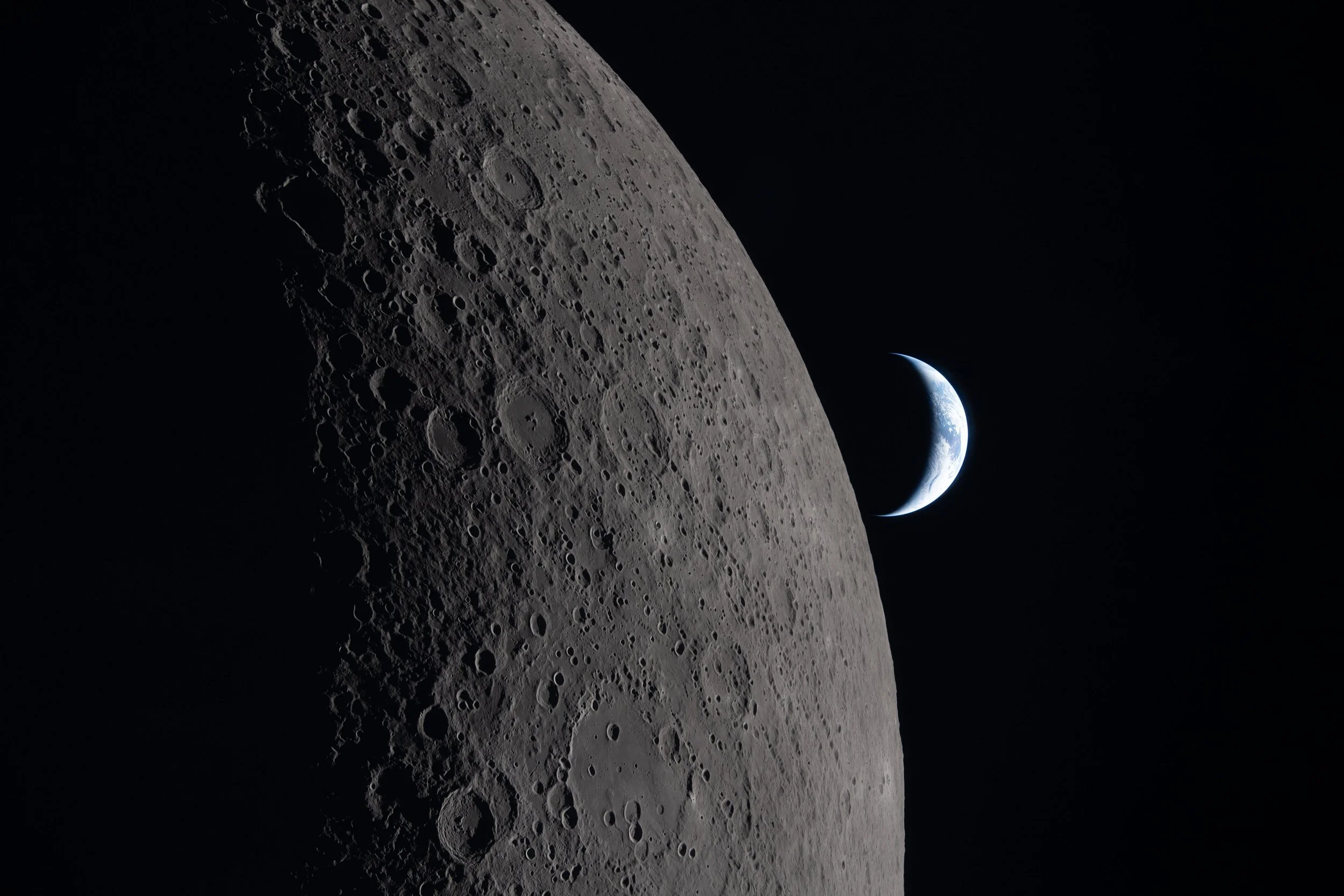
“Capturing the Details of the Moon and the Beauty of Earth” taken from Artemis II on 06.04.2026 © NASA
Life on Earth, Earth Day or no, is a complex and complicated affair and, so some may declare, there’s nothing new under the Sun. But what if something new could yet be found? Where to look? So much the way we live our lives is outward-looking, surface, illusion. We thought it was during lockdown, but perhaps now, as we reach for the Moon, is the time for some sober self reflection. Time to go inside and explore a little deeper who we truly are and contemplate whether there might yet exist alternative perspectives on how (today) we can perceive our present, past, and future.
Once upon a time a sense of the past were generally understood, and narrated, through the lens of (an official) history, and personal histories—like family trees. The future wasn’t really a consideration except perhaps for the ancient Greeks or Romans, Popes or Pharaohs, Sultans, Tsars, Emperors, and Kings (or Queens) who wanted to mark their elevated standing, as it were, for the sake of posterity.
Then, along came science fiction and fantasy: inevitable, fully-formed products (I’m guessing) of the Age of Enlightenment. Sci-Fi, a kaleidoscopic lens that gave permission to fantasise (or dread) an anticipation of a golden future right here on Earth (or some other fantastical sphere in the Solar System) replete with the fattening fruits of scientific (and technological, for Tech-Fi) progress; something rather like a collective destination; an arrival of sorts, and prosperity for one and all—and all that…. Did Leonardo ever think in terms of science fiction?
Arguably, without our hardly registering it, the future is arrived and, as it has been said (in an old Punch or Vanity Fair cartoon), it is not what it used to be! This, whatever it is, appears to be it—according to the leader of the democratic world, “The whole world has become unfortunately somewhat of a casino.” Presently, as we place our bets, the dream of good times to come fractures and collapses in on itself; as if stuffed into an antiquated pipe, ever ready to ignite, to snuff out. But truly— — — Where there’s a beating heart there’s hope. And, so, the present drum beats the question, Where do we go from here?
—//—
Forever London…. Though, just like any city, its physical make-up—i.e. bricks and mortar—is in a continuous state of transformational flux. At night, the city’s illuminated skyline sparkles with a string of dotted red safety lights, the cranes of building sites. And by day everywhere the streets are being dug up, laying pipes and cables to accommodate new infrastructures, urgent needs for city-dwelling expansion. London is a model of perpetual architectural evolution and, in some cases innovatiion.
London City Hall’s capital spending plan for the 2025-26 financial year totals £5.02 billion. This budget covers various urban development, housing and infrastructure projects across London, providing just a glimpse into the scale of investment.
In this edition of L.E.O. Peter Culley, the international award-winning designer, architect, and urbanist gives us an overview of his top five London builds from the last 12 months. With projects in the UK, US, and Europe Peter is the director of architecture and general design practice at Spatial Affairs Bureau. He has taught at some of the world’s most renowned architecture and design schools and writes occasionally for YES & NO. The home and workplace compound he designed for artist Rana Begum was one of the top attractions at the 2025 London Open House Festival.
—//—
Towards the end of March, a Guardian headline read: “5 million tonnes of CO2 emitted in just 14 days of US war on Iran, analysts find.” This mind-boggling statistic is followed by the revelation: “War in the Middle East is draining the global carbon budget faster than 84 countries combined.” However, there’s been surprisingly little consideration of the environmental impact of the ongoing activities—the seemingly relentless epic hammering—in specific parts of the world. Nor have the damaging effects of sending rockets into space, to the Moon and back, received much attention. Pollution-wise, aerospace engineer Moriba Jay noted that “between 1969 and 1972 Apollo astronauts left 96 bags of human wast—urine, faeces, and vomit—on the lunar surface.” The size of the bags isn’t mentioned. This is a particularly striking fact considering the infamous ‘no-go’ space toilet incident on Artemis II. It’s a comforting reminder that despite our intelligence, far surpassing that, we are told, of any other living being on Earth, Humans are, ultimately, creatures of the Earth.

Panorama view of Apollo 15 lunar module pilot James B. Irwin. © NASA
Vis-à-vis Artemis II, concerns are being raised about the potential impact of modern space missions on the Earth’s ozone layer and the Moon’s environment—notwithstanding Jay’s comment above about Human waste. These missions are estimated to cost some $93B and produce a carbon footprint of 3,000 tonnes per launch. And, so, with the NASA scientist’s plans for Space exploration and the future of the Moon, the Climate Change argument will no doubt continue. The rise of the “billionaire polluters” and the US’s revocation of the “endangerment finding” have only heightened matters still further. This argument continues to hover ominously over the heads of Humankind, permeating the fibres of an increasingly fragile mode of modern, everyday life on Earth. Earthbound is arguably our ultimate destination.
We invited Nick Breeze—a supremely knowledgeable Climate Change commentator who has a knack of translating jargon into everyday language—to help us navigate our way through the noise and gain even just a little more clarity concerning the more pressing aspects around the labyrinthine issues of the Climate, and Nature, Crises. Nick is a climate reporter and author of the highly praised book COPOUT—How Governments Have Failed The People On Climate. Here, in L.E.O., he presents a concise summary of some of the set-backs and developments in this hypersensitive field of debate.
Enjoy L.E.O.
Cassius

Five Of London’s Best Builds Of The Last 12 Months
by Peter Culley
1. The Stone Demonstrator—Empress Place, Earls Court
First-up on our list of the top five 2025 built-environment highlights may not be quite what you would class as a building. But since the official definition of architecture is “the art or practice of designing and constructing buildings” and I would include a ‘scientific’ aspect too, this research collaboration firmly qualifies. An ephemeral, and living, 1-1, three-storey prototype “almost house” commissioned by Future Observatory at the Design Museum, this structure for the time being is hosted by the Earls Court Development Company within its massive redevelopment project. It is, as per structural engineer Steve Webb: “a demonstration to show the feasibility of replacing high carbon fossil fuel era materials like fired clay, brick, steel and concrete, with low-carbon stone and timber.”
It's always welcome to see a commitment to responsible future-planning and experimentation set against the backdrop of London's seemingly unquenchable thirst to keep on building and, despite ambitious targets within the industry, in fairly conventional ways and at pretty much whatever cost to the environment. And so I think the Stone Demonstrator hits harder placed at the centre of an enormous commercial development.
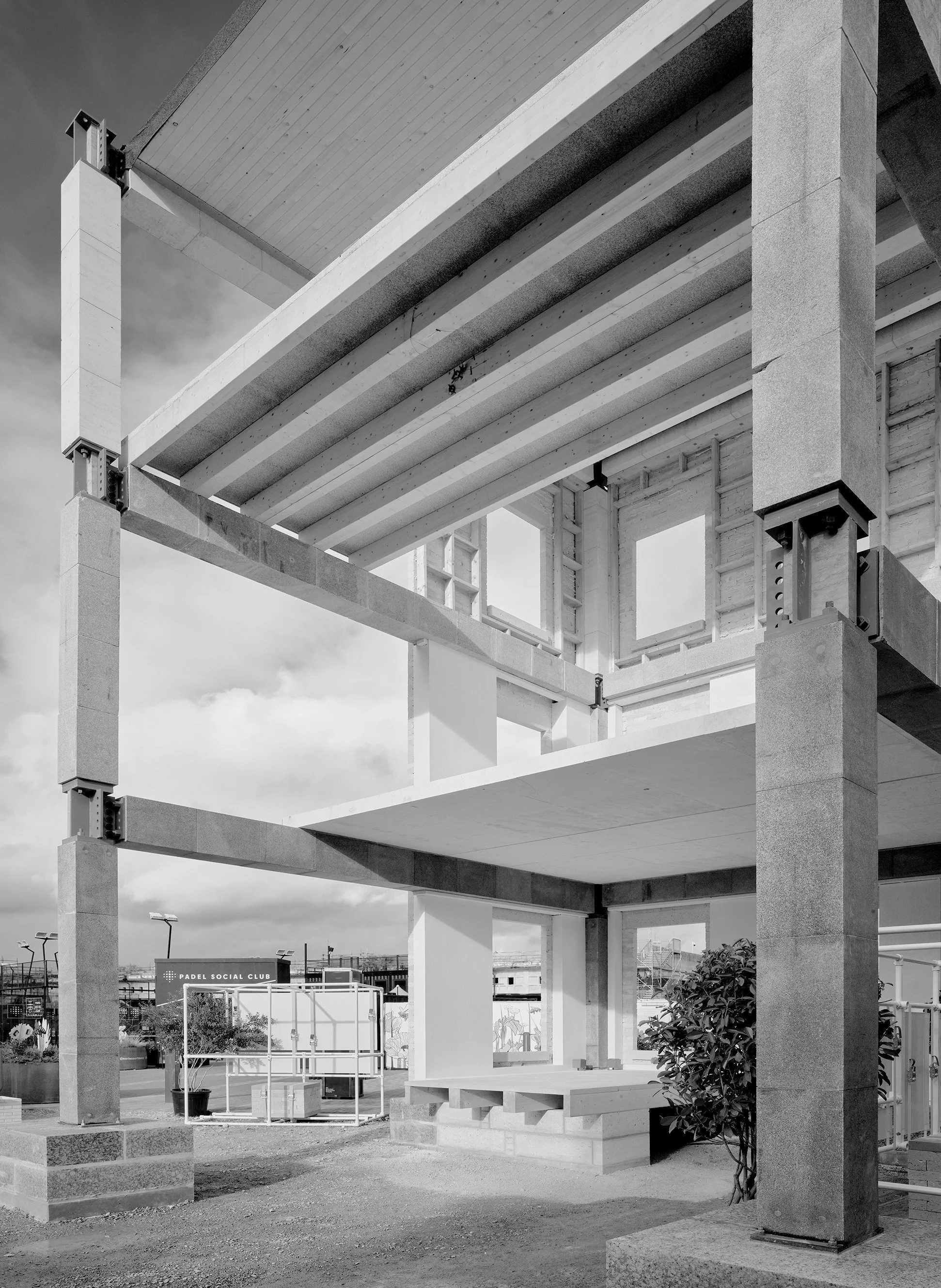
Stone Demonstrator. Photo: Bas Princen. Courtesy of the Design Museum
For context, as per the Design Museum’s website post about the project, “nearly 40% of global carbon emissions are created by the built environment, with 11% coming from the construction of new buildings. Natural stone is an extremely low-carbon material. The Stone Demonstrator is a prototype of an alternative way to build that reduces carbon emissions by approximately 70% compared to a reinforced concrete frame, and 90% compared to a steel frame.”
In my own practice, when I once tried to specify long lengths of granite for a 3m wide cantilevered structural stone staircase, I faced regulatory issues around the potential of stone—as a natural material—to contain unpredictable fissures and other flaws. The hybrid of stone, timber, and steel rods that Webb Yates and Groupwork developed, combined with their advanced testing methods, successfully cuts through the conventional red tape.
Structural Engineer: Webb Yates—MORE
Architect: GROUPWORK—MORE
Funding:
Future Observatory—MORE
UKRI Arts and Humanities Research Council (AHRC)—MORE
2. Avanade Intelligent Garden & Building—Chelsea Flower Show Gold Medal & Innovative Construction Award 2025
Physically non-committal in a different way, this stunning synthesis of landscape (garden) and architecture (potting shed) from Studio Weave, Tom Massey, and Sebastian Cox existed only for a few days in May as a highlight of the Royal Horticultural Society’s (RHS) annual Chelsea Flower Show; though it is understood it could find a permanent home in Manchester’s Mayfield Park – cross your fingers / or perhaps in this case your salvaged ash-wooden truss straps (!). Sponsored by AI group, Avanade, this project showcases how Large Language Models (or LLMs) can be used to monitor and support the health of urban tree. The shed utilises home-grown mycelium (a strain of fungus grown especially for construction) for its cladding. This is a notable reference to the ‘neural pathways’ that AI technologies are built on. Meanwhile, wood from felled trees that had succumbed to the fatal ‘ash dieback’ disease was used to form a woven framework, demonstrating innovation in timber structures.
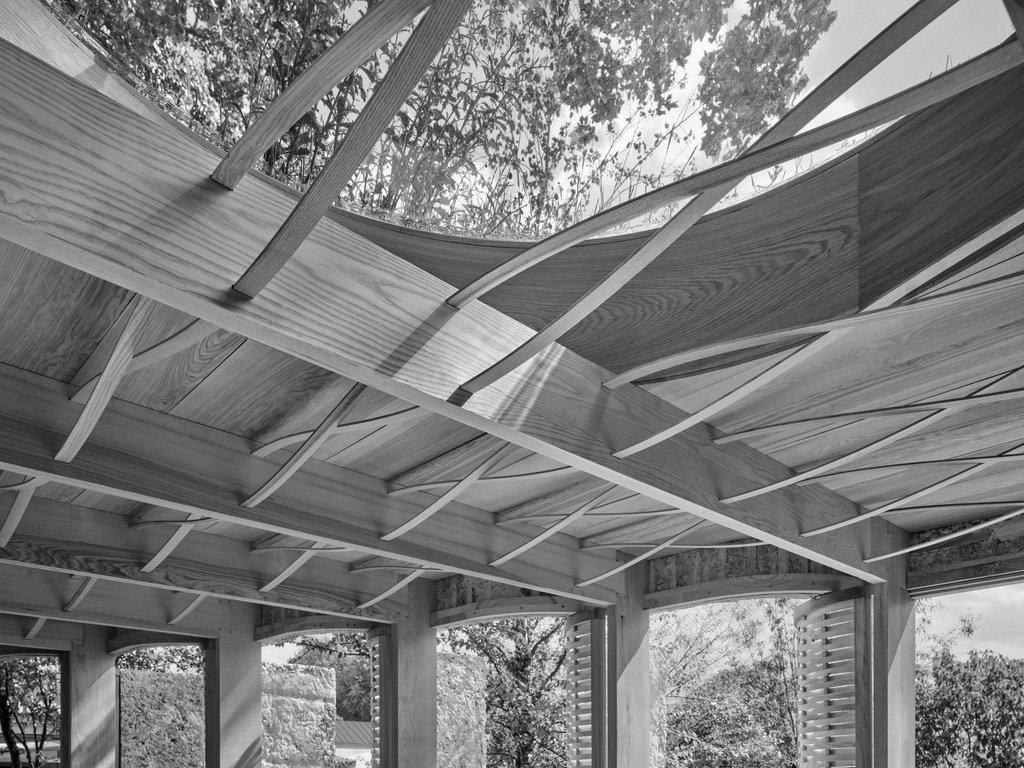
Royal Horticultural Society Garden. Photo: Daniel Herendi
As the RHS notes, “the opportunity to explore how AI can be integrated into sustainable landscape management was too exciting and interesting to pass up.”
It is great to see a truly intelligent and viscerally beautiful collaboration between architect, landscape designer, and fabricator. This approach may be one way to help save the environment crisis, or at least survive it better.
Architect: Studio Weave—MORE
Maker: Sebastian Cox—MORE
Landscape Designer: Tom Massey—MORE
RHS Chelsea Garden—MORE
3. Walworth Town Hall—Southwark
A successful adaptive re-use of a ‘problem-status’ historic building that demonstrates how a collaboration between a community agency, an enlightened developer, a sophisticated local authority, and an inventive architect can achieve ‘value added’ prestige points: the preservation of embodied carbon structures and cultural memory. This is important because in the pursuit of a genuinely sustainable way of working, we are so often told, “the economics just don’t add up.”
The Town Hall was badly damaged by fire in 2013. Formally re-opened in March, it is now symbolic of an encyclopaedia of beautifully resolved contemporary spaces with a deep nod to the building’s cultural heritage. These spaces are used for a mixture of community and business activities: including a stunning, flexible events area, a hybrid model for operator, management, and owner.
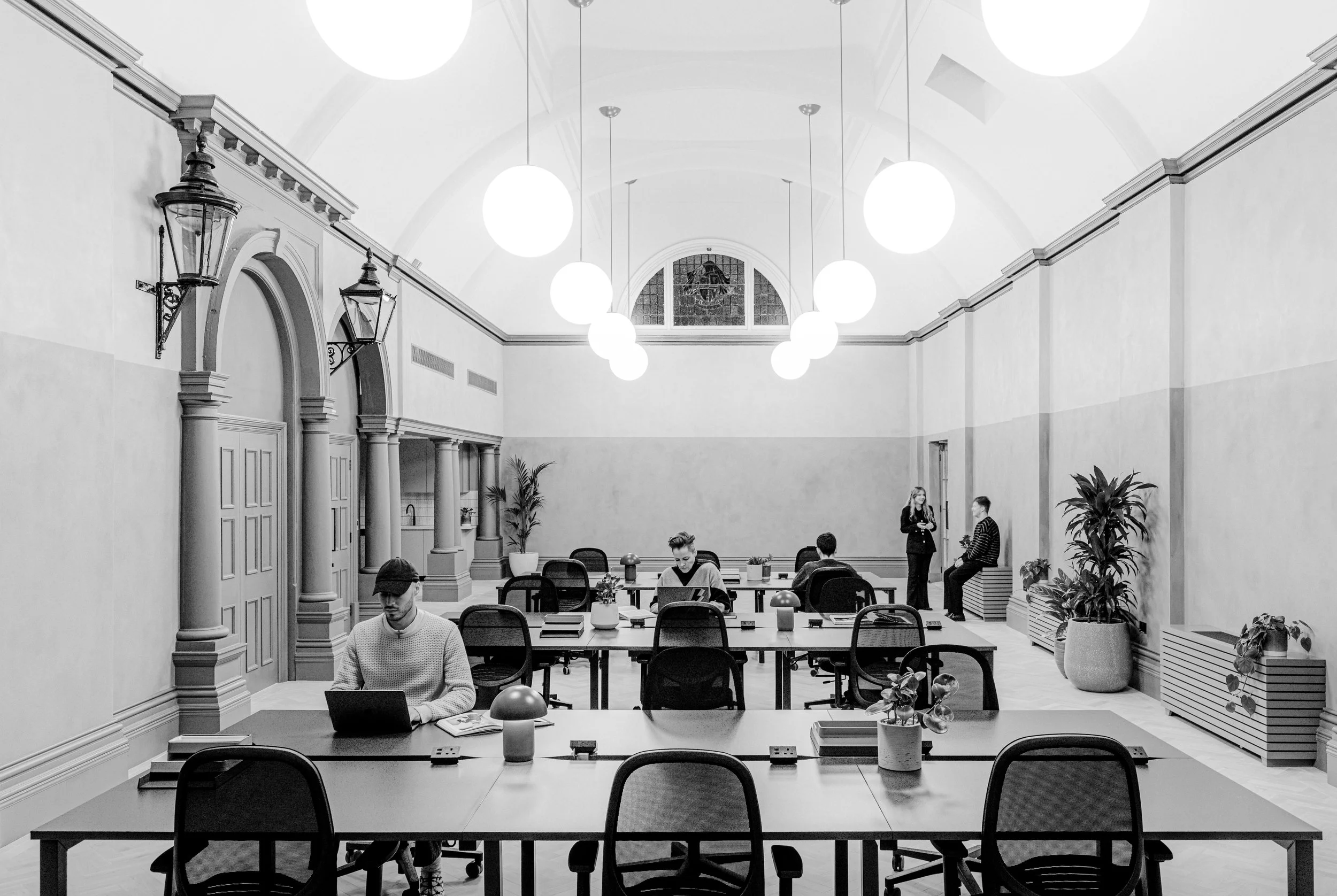
Walworth Town Hall. Photo credit: Chris Wharton
Southwark Council’s press release for March 2025 states: “The Walworth Town Hall Community Space’s team are working collaboratively with the estate developer General Projects who worked on the restoration after winning the contract against a competition of 60 applicants. General Projects worked with LGBTQ+-led, Peckham-based architect Felix and Merlin to create an impactful design. There was also collaboration with Historic England and local community groups to ensure that the reworked design felt true to the people of Southwark and the rich history of the town hall.”
Client: The Walworth Town Hall Community Space—MORE
Local Authority: Southwark Council; Developer: General Projects—MORE
Architect: Felix and Merlin—MORE
4. Appleby Blue Almshouse—Southwark, 57 apartments for over 65 year olds
Winner of the RIBA Stirling Prize in 2025 and another outstanding urban feather for Southwark’s cap, Appleby Blue Almshouse architects, Witherford Watson Mann, were commissioned by United St Saviour’s Charity to reinterpret the traditional alms house typology. This has been achieved, on a large scale, within the inner-city site combining an inward sanctuary and an outward-facing identity. As a charity, United St Saviour’s has supported subsidised housing since the early 1540s.
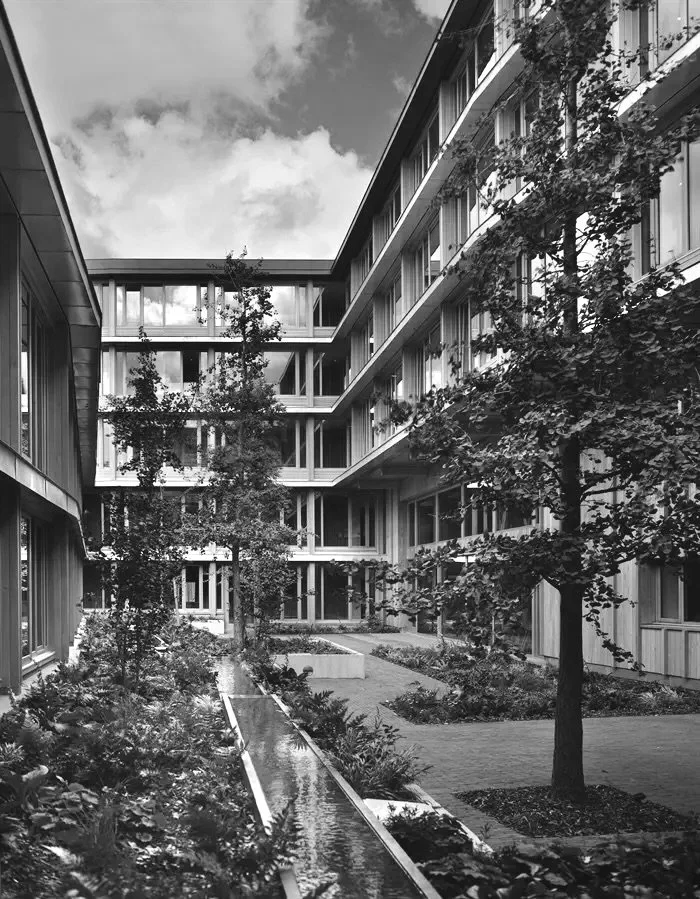
Appleby Blue Almshouse. Photo: Philip Vile
The citation for the award in RIBA’s press release reads, “….above all, the project can give us hope for high-quality, high-density housing and the possibility of positive communal connections coming from the bald housing targets of government.”
On a personal level, I am a fan of courtyard developments where the temptation (and often the commercial pressure) to build across the entire site is resisted. Appleby Blue, instead, focuses on natural, airy light, outside spaces, and growing and relaxation. This inner-city London project sets a new standard for an increasingly large section of society that can be an example to other urban environments all around the world. Co-living with plants and air-filled spaces in later life seems like a pretty good way forward to me!
Client: United St Saviour’s Charity—MORE
Developer Partner: JTRE—MORE
Local Authority Partner: Southwark Council; Architect: Witherford Watson Mann—MORE
Landscape Architect: Grant Associates—MORE
5. V&A East Storehouse including The David Bowie Centre—East Bank, Queen Elizabeth Olympic Park
An adaptive reuse initiative (formerly part of the 2012 Olympics Media and Broadcast Centre, now known as Here East) the East Storehouse is billed by the V&A as a “backstage pass” for all.
This hybrid exhibition-cum-collection warehouse is a brilliant exemplar for what has become a new set of modi operandi for so many internationally renowned contemporary museums and institutions. It is education and research via visceral access; the “order an object” call to action allows visitors to choose themselves from the menu and inspect, lab-like and at close quarters, rare objects). It’s also high-octane community engagement.
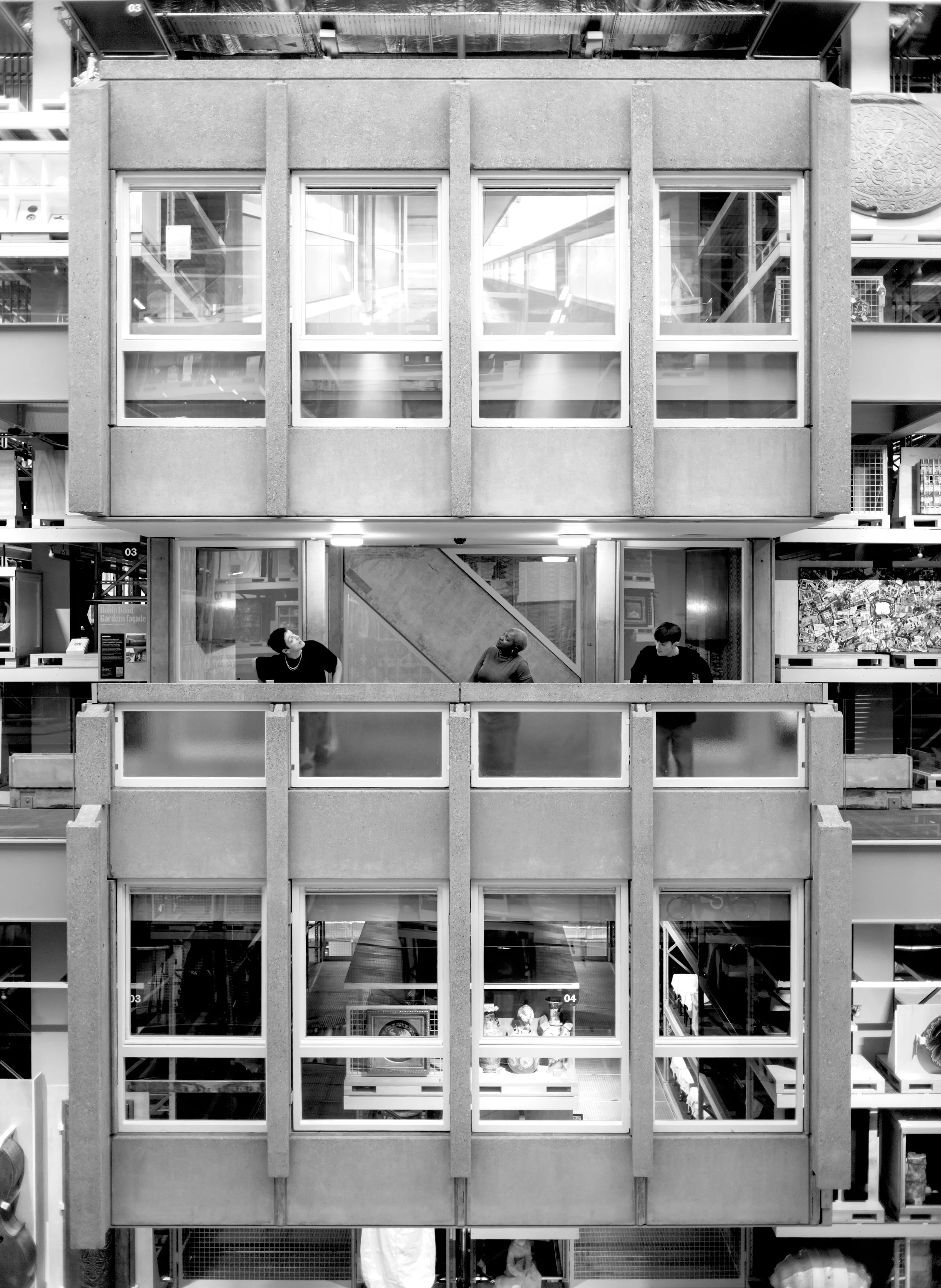
View of a section of Robin Hood Gardens, a former residential estate in Poplar, East London, at V&A East Storehouse. Image by Kemka Ajoku for the V&A
Rather than as an offshoot of the main event—i.e. the sumptuous, stone-lined permanent exhibition spaces of V&A in South Kensington—the vibrancy of the Storehouse’s “behind the scenes” concept instead takes centre stage. Hats off to Tim Reeve, V&A Deputy Director and COO, who developed the idea and to architects Diller Scofidio + Renfro. DS+R responded to the brief consummately, providing an appropriate range of architectural scale and voluminous space; a responsible spectrum of airy clean light in circulation areas where one should to total blackout around light sensitive artefact where one mustn’t; appropriate and careful specification of functionality art storage systems; and a coherent circulation system of multiple paths to art.
I can't help feeling, however, that the identity of the architectural interior for the money shot X-ray-like collection views at the central Weston Collections Hall misses the pitch. It feels a bit like the passive aggressive person in the meeting that you can tell has a strong opinion but refuses to voice it. I'd rather go with one of two other directions. Either turn its volume up (think the colourful but infinitely refined 1970s and 80s high tech warehouse-palaces of Lords Richard (Rogers) and Norman (Foster) so there's something to play against the, say, wonderfully hung panels of Robin Hood Gardens (which remind us should still instead be attached, fully functioning, to its now demolished heroic social housing frame just along the road in Poplar). Or drop it down, confidently IKEA-style, with less polished materials and polite pale grey colours, and only really see the painting racks or simple armatures to support the magnificent ceilings, colonnades or murals – also thankfully saved - from the collection. Where this does happen, and it does regularly - through necessity - and the building completely acquiesces to other architectures from other places, or just has no architecture at all, more magic arrives and a palpable connection between the viewer and artefact forms.
Architect: Diller Scofidio + Renfro—MORE
With support by local architect: Austin-Smith : Lord—MORE
The David Bowie Centre designers: IDK—MORE
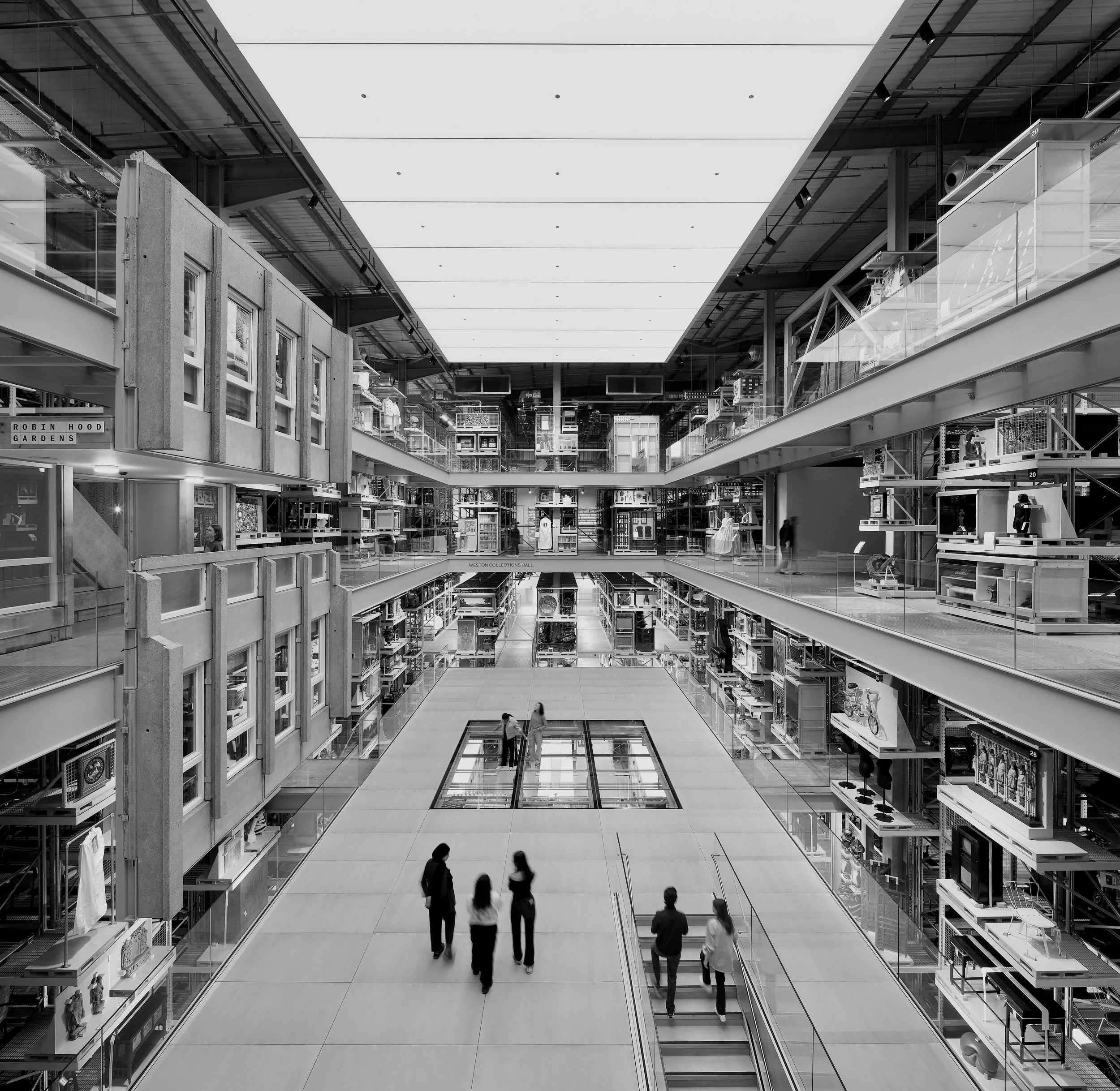
V&A East Storehouse. Photo: DS+R for V&A East Storehouse © Hufton+Crow
POSTSCRIPT
And now with the much anticipated new build V&A East Museum (a subject for later review) by studio O’Donnell + Tuomey just opening right around the corner, our extraordinary East Bank Olympicopolis art and cultural visits will surely go on and on….
Architeccts: O’Donnell + Tuomey—MORE
@peter_culley & Spatial Affairs Bureau—MORE

Vivienne Westwood: A Personal Reflection Into An Active Life
by Ki Price
Having worked with Vivienne Westwood (1941 - 2022) for more than a decade, I was given the opportunity to document her activism from a privileged and uniquely intimate vantage point. For the last twelve years of Vivienne’s life—ten of them working closely together—I photographed her not only as a fashion designer and cultural icon, but also as a relentless activist. Through campaigns, protests, shows, and public events I had access to the moments that reveal the depth of her commitment to raising awareness around political and environmental causes.
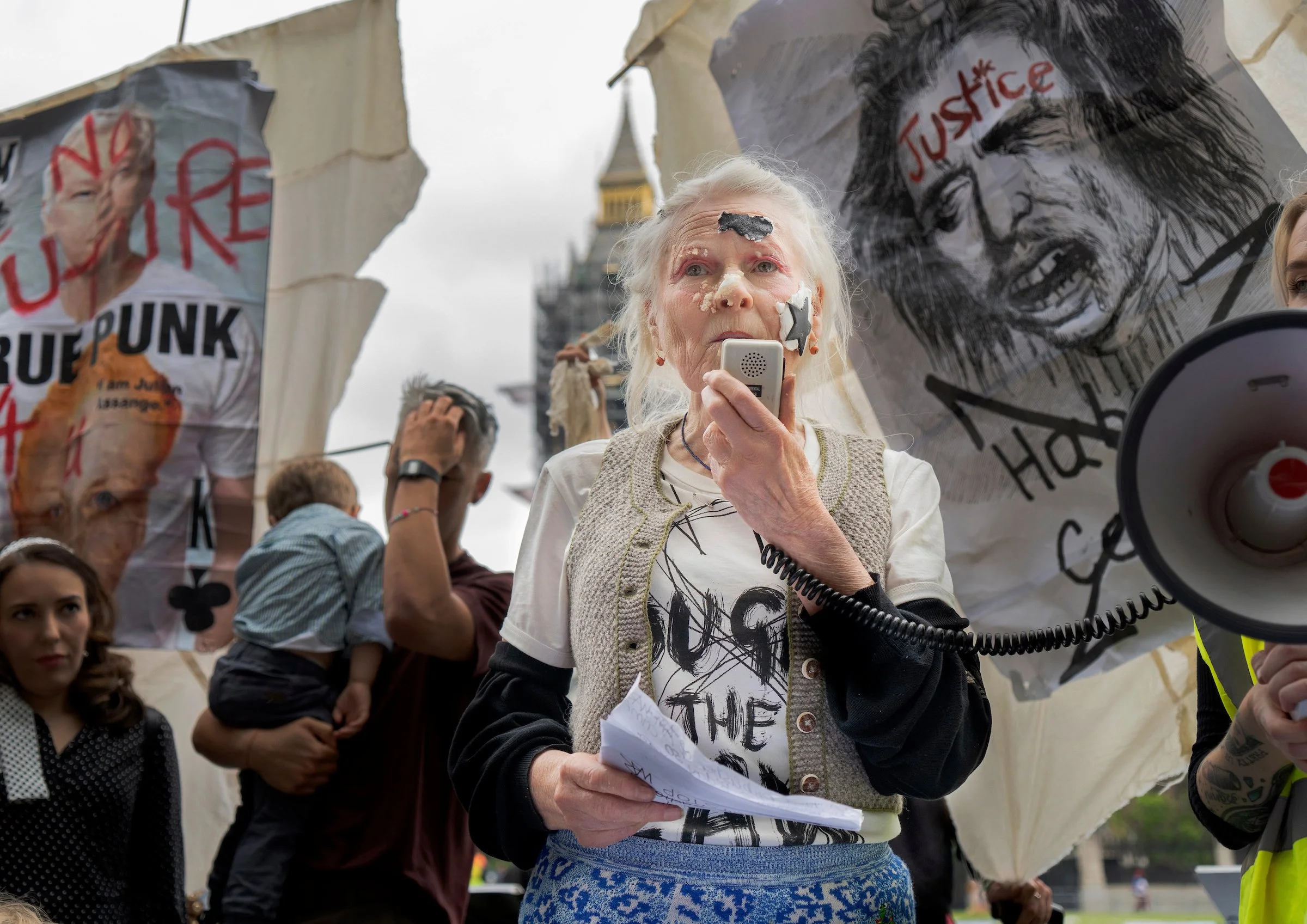
Vivienne Celebrates Julian Assange’s 50th Birthday. This was a striking tribute, as Assange remained incarcerated in Belmarsh Prison. Westwood called attention to his plight and advocated for his freedom. Supporters and activists joined her in highlighting concerns over press freedom and human rights, ensuring that even in confinement Assange’s milestone birthday was publicly recognised and honoured. Photo: Ki Price
An Active Life, presented at The Light House Soho in London—home of The Vivienne Foundation—is a personal selection of photographs drawn from my years working by her side. Vivienne and I collaborated closely on many of her activist campaigns. I was her photographer; documenting the work she felt was most urgent in her life. While fashion remained part of the visual language surrounding her, what matters most in this collection of images is what she stood for, the causes she championed and the awareness she sought to raise.
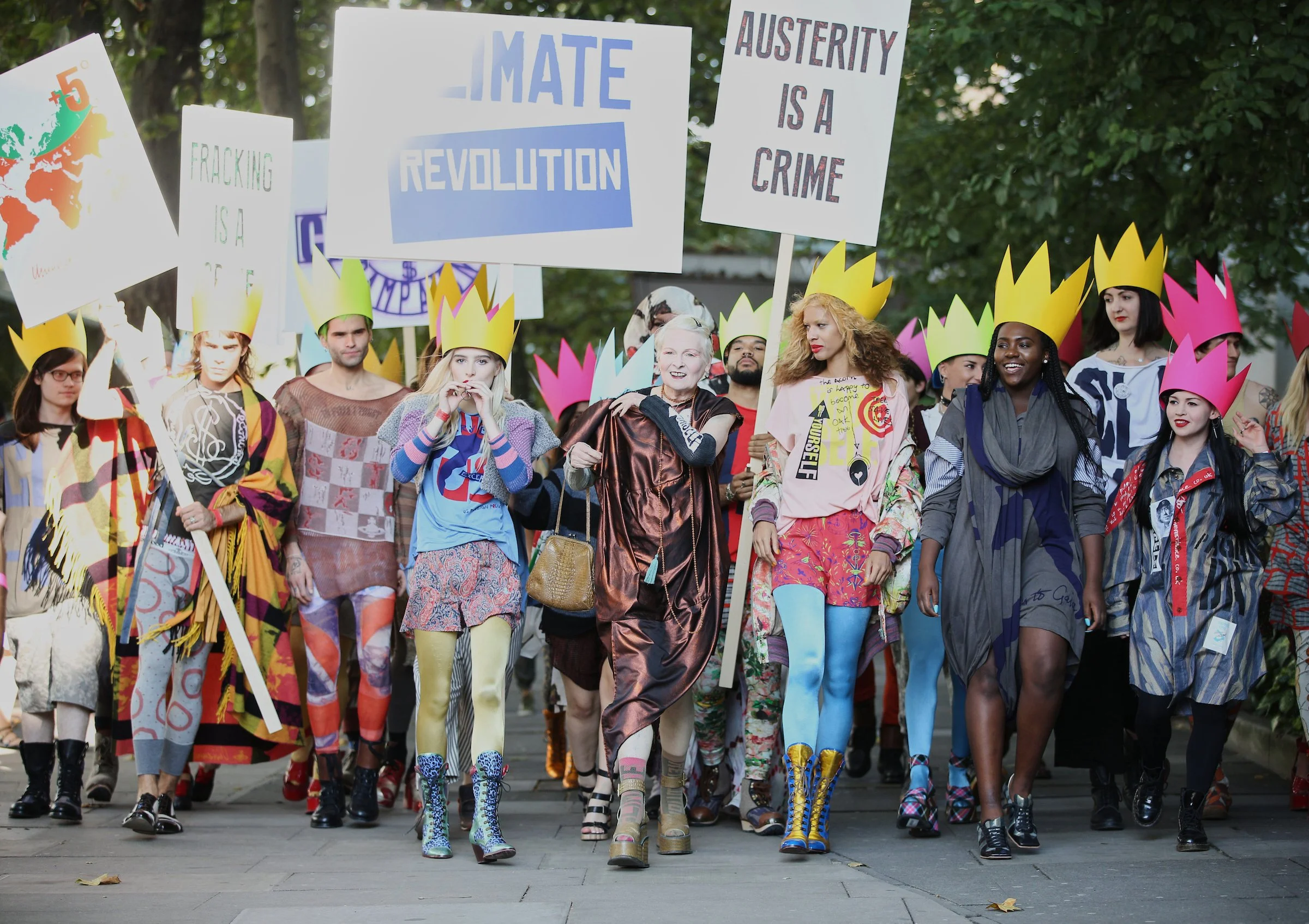
Vivienne Westwood Red Label, London Fashion Week SS16, Ambika P3, London, 20 September 2015. Westwood with models at the Red Label show during London Fashion Week SS16. Before the show, Vivienne led a protest on the street with the models, bringing activism directly into the context of the runway. Photo: Ki Price
Selecting the exhibition’s 24 images required revisiting my archive of between 50,000 and 100,000 photographs. The process unfolded over several years, during which time related photographs have been shown internationally; including in exhibitions connected to Rei Kawakubo/Comme des Garçons and Vivienne Westwood at the National Gallery of Victoria in Melbourne, as well as presentations in Stockholm and Finland.
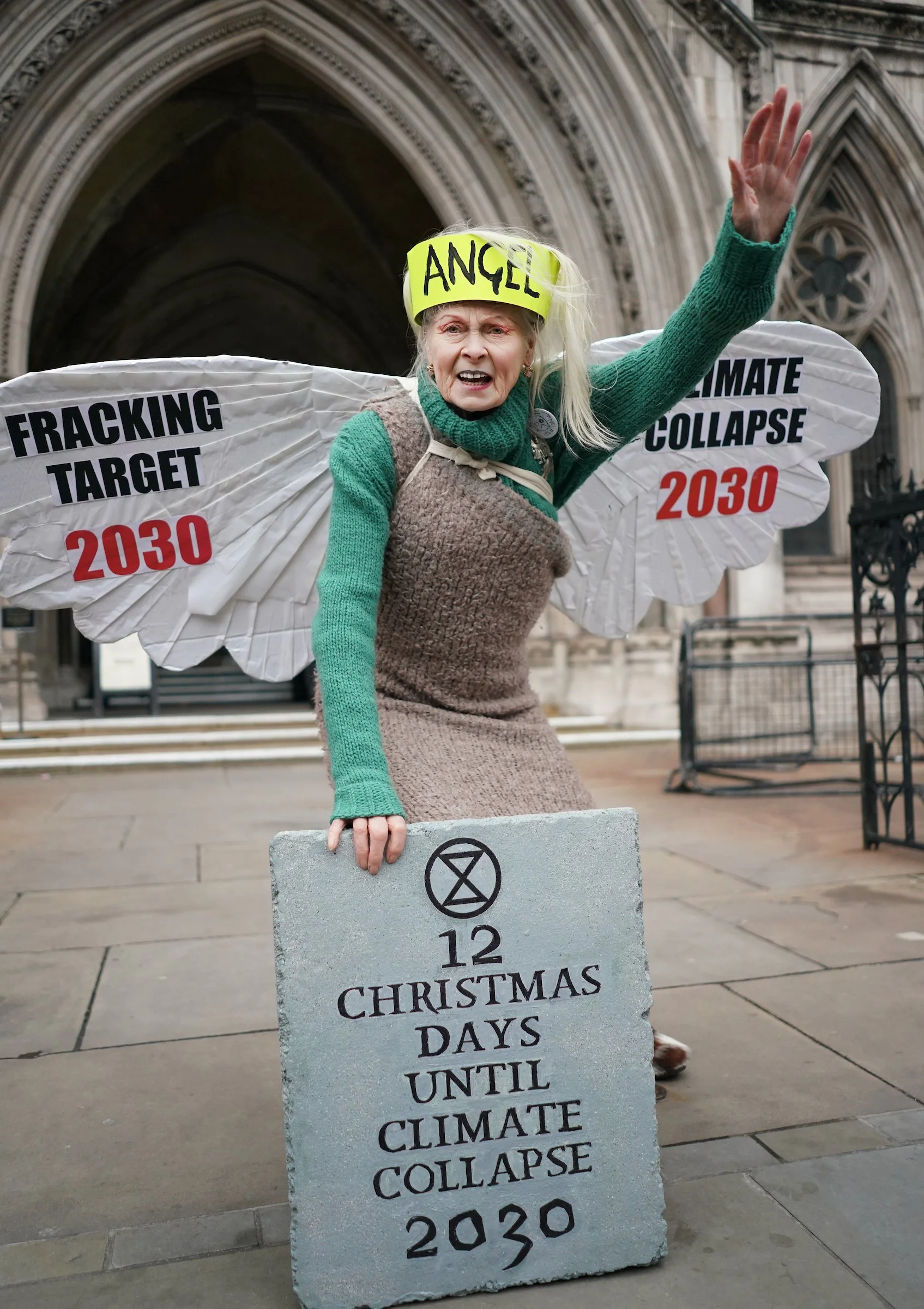
Royal Courts of Justice, London, 18 December 2018. Westwood outside the Royal Courts of Justice on The Strand to protest in support of the ban on fracking, a decision later overturned following a legal challenge by her son Joe Corré. Photo: Ki Price
My hope for An Active Life is that it continues to grow, educate, and inspire. Though many pieces in the exhibition have previously been shown in museums, bringing the exhibition to The Light House Soho feels especially meaningful because it is here that Vivienne’s memory lives on. The space allows her legacy to reach new audiences—engaging with people who may not yet know her work and ideas as a designer or the activism that defined so much of her life.
The images shown in the exhibition are limited editions of 25, with 50% of the proceeds supporting The Vivienne Foundation, a not-for-profit company, and the causes she fought for.
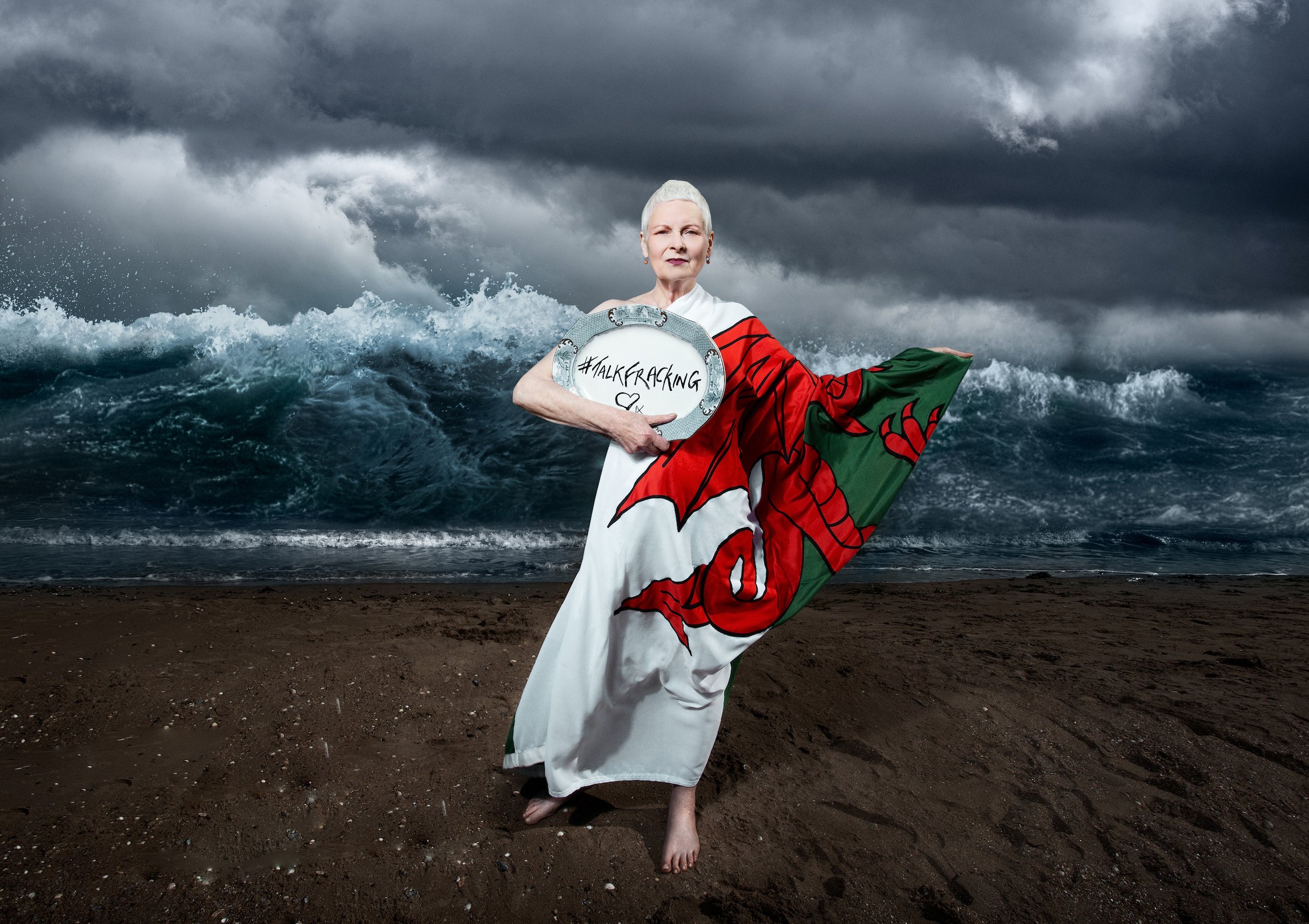
Talk Fracking, Swansea Beach, Gower Peninsula, Wales, June 2014. Westwood on Swansea Beach holding a charity-shop plate on which she wrote the words “Talk Fracking”. Shot during the 2014 anti-fracking campaign this remains my favourite and most iconic image I made of Vivienne. Photo: Ki Price

What’s Going On….? Insights Into A Thorny Dilemma
by Nick Breeze
In November 2025, the 30th United Nations Climate Change Conference (COP30) began with the UN Secretary-General António Guterres making a public statement that misrepresented the best science on climate change today.
“Science is clear: a temporary overshoot above 1.5 degrees Celsius is now inevitable. I share … your determination to make this overshoot as small and as short as possible by fighting back, by holding leaders to account, and by demanding action.” (UN Secretary-General António Guterres at COP30, in Belém, Brazil)
The idea that we can temporarily “overshoot above 1.5ºC” is an untrue assertion. It is true that by adding an increasing amount of greenhouse gases into the atmosphere with each passing year, we are causing a catastrophic heating of the earth. The extent of the damage we have collectively—but not equally—inflicted on the biosphere means that temperatures will now continue to rise for decades to come. The world’s leading climate scientist, Dr James Hansen, has clearly demonstrated that, at current rates of emission, we are soon going to pass 3ºC of the mean average of global heating.
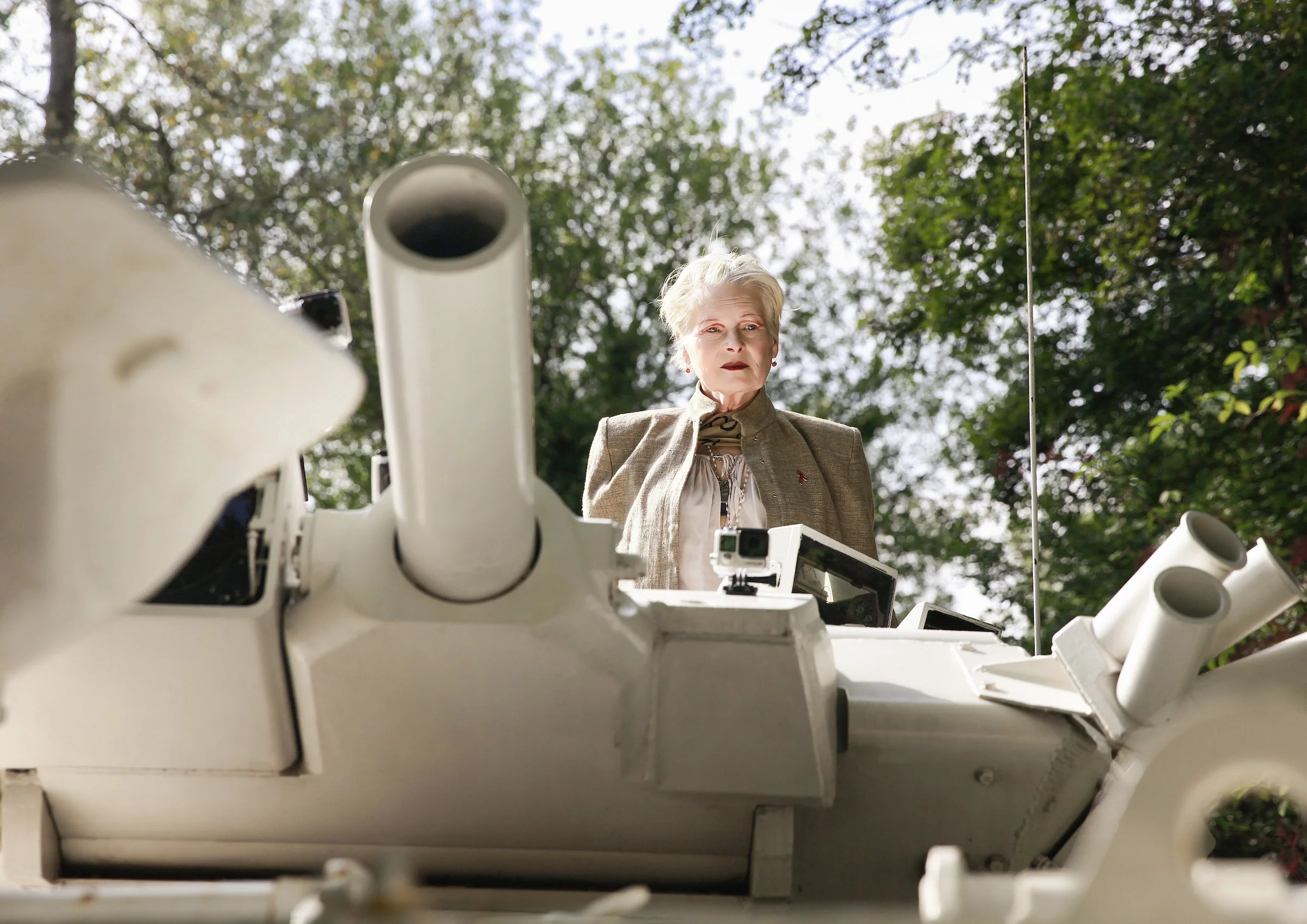
Stop Fracking Protest, David Cameron’s Country Residence, September 2015. Westwood arriving at David Cameron’s country home with the activist group the Nanas to serve notice opposing fracking. Photo: Ki Price
Today’s buzzword in public discourse on climate change is ‘overshoot’. This banal expression suggests that humans possess an imaginary planetary thermostat which can be controlled at will. It implies we can continue to heat the world up beyond safe limits set by scientists and then, somehow, go in reverse mode when we eventually reduce carbon pollution to zero and scrub greenhouse gases from the atmosphere. But emissions continue to rise and carbon removal doesn’t yet exist at any meaningful scale.
If “temporary overshoot” were possible, the very notion of returning back to where we were is a false one. For every point of degree we heat up the planet, we are seeing irreversible side effects: the extinction of species and the melting of vast ice sheets that regulate our sea levels and ocean systems.
The COP process focuses on getting nations’ leaders to work together in an attempt to steer Earth’s fate in a sustainable direction—primarily by reducing greenhouse gas emissions from burning fossil fuels. Countries that produce fossil fuels possess, and use, the power of veto at every COP meeting to suppress any mention of thorny terms. Thus thirty years of conferences have produced a lot of rhetoric and only small doses of action.
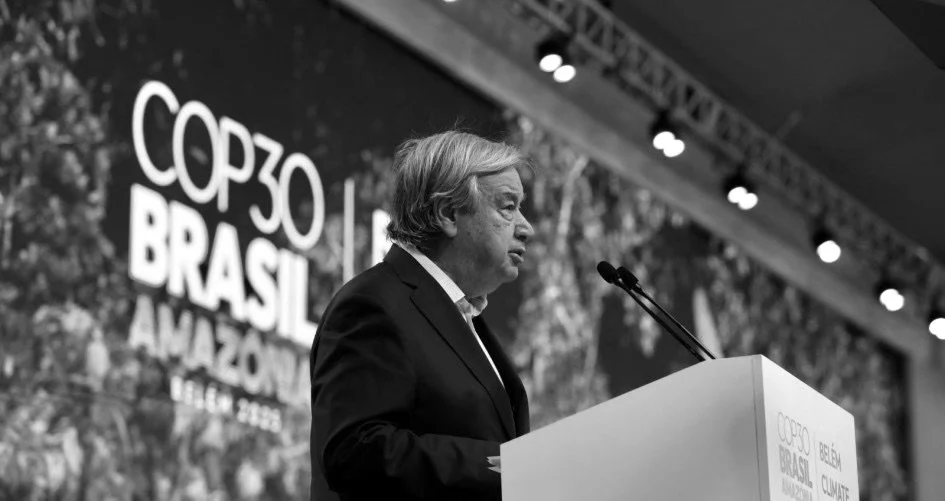
UN Secretary-General António Guterres at COP30, in Belém, Brazil
The Paris Agreement was signed in 2015. It was hailed as the structural policy lever that would save humanity. Since that time, however, we have collectively pumped around half a trillion tonnes of additional carbon dioxide (and other equivalent gases) into the atmosphere.
To restore the planet’s emission of carbon dioxide to safe levels, we need to reduce the atmospheric burden by approximately a trillion tonnes of carbon. This means literally sucking it out of the atmosphere, or sequestering it through rocks, soils, or ocean-cycling systems and storing it, safely in the ground, for millennia to come.
But, instead of doing what is necessary to address this existential problem, we continue to increase greenhouse gases. This is nothing less than a collective suicide where no nation stands to benefit.
The UK, for example, will be devastated by the collapse of ocean heat currants, called the Atlantic Meridional Overturning Circulation (AMOC), that transports warm weather conditions up from the tropics. This will cause dramatic cold and dry weather patterns, making agriculture almost impossible and life for everyone grim, if not impossible. Global heating will decimate food production as the mid latitudes are scorched. Coastal areas will be flooded and global conflicts will inevitably increase.
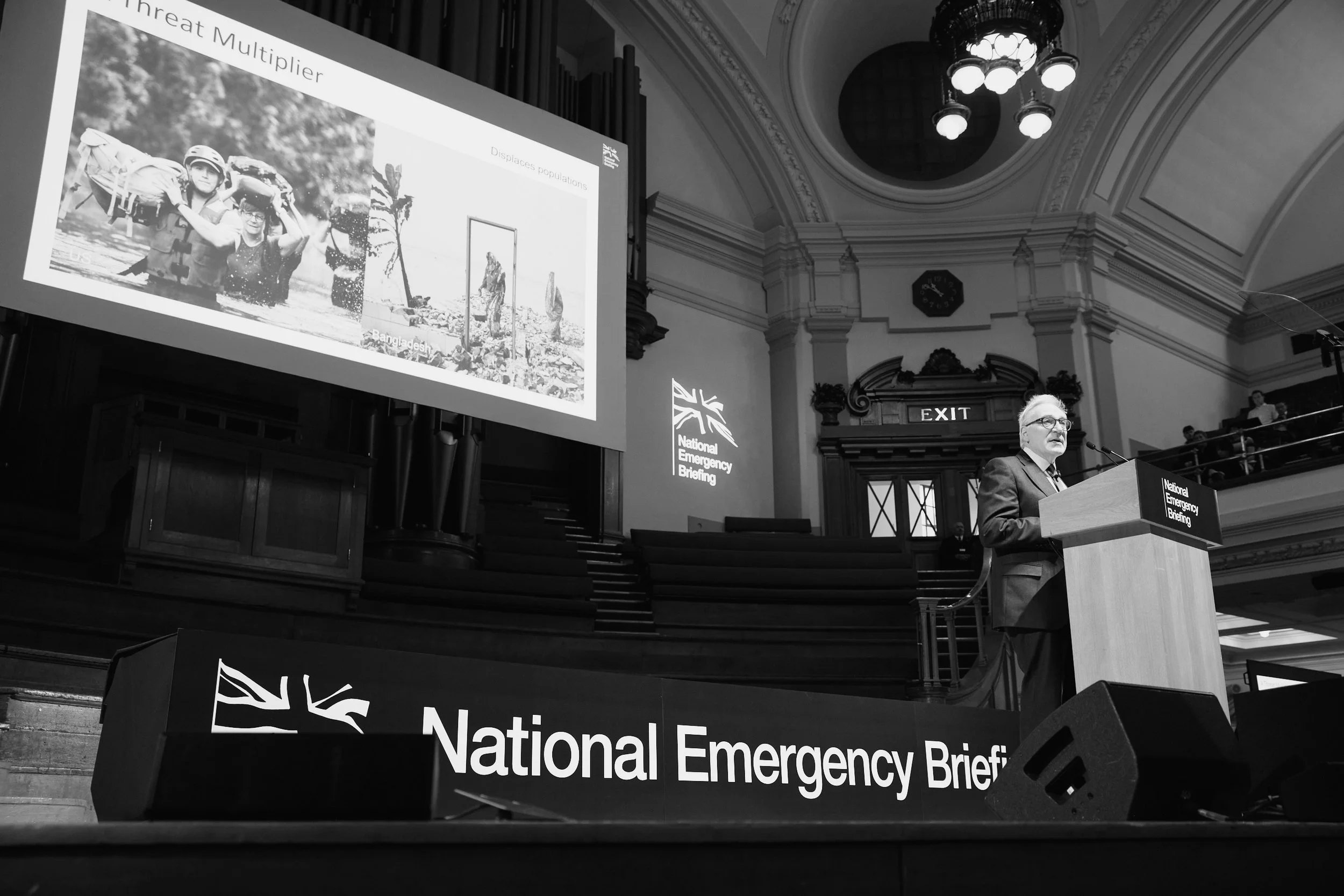
Lieutenant General Richard Nugee at the National Emergency Briefing, London
Also in November 2025, London hosted the first National Emergency Briefing. Outlining interconnected climate risks to the UK, the event was presented in fifteen minute sessions by our best scientists briefing on health, energy, national security, economy, food production, and more. It was an inspired initiative where one and a half thousand of Britain’s leading minds from the arts and media to business and politics attended to hear the truth about how climate change threatens our communities and national security. A campaign is now afoot to pressure a broader emergency briefing to inform the wider public and thereby promote a state of better preparedness.
Meanwhile, the framing of ‘overshoot’ as a benign state of our changing climate is being widely accepted as unavoidable by world leaders. Now is the time for a hard truth; time to make an assessment of our real options. By galvanising our response to this dilemma at home, we stand a better chance of empowering our politicians to speak on our behalf on international forums such as the United Nation’s COPs and other potentially consequential initiatives
The contents of this summary are discussed in more detail in Breeze’s latest genn.cc podcast—MORE
National Emergency Briefing—MORE
COPOUT—How Governments Have Failed The People On Climate—MORE

“Project Hail Mary—Out Of This Launch World”. With a gross production cost of around $248M, details of the financial cost and carbon footprint of the high-altitude stratospheric balloon feat have not been publicly disclosed. © Sony Picture Releasing UK and IMAX

YES & NO Presents…. Washington, D.C.
Austrian Art & Film: Shaping The American Avant-Garde—MORE
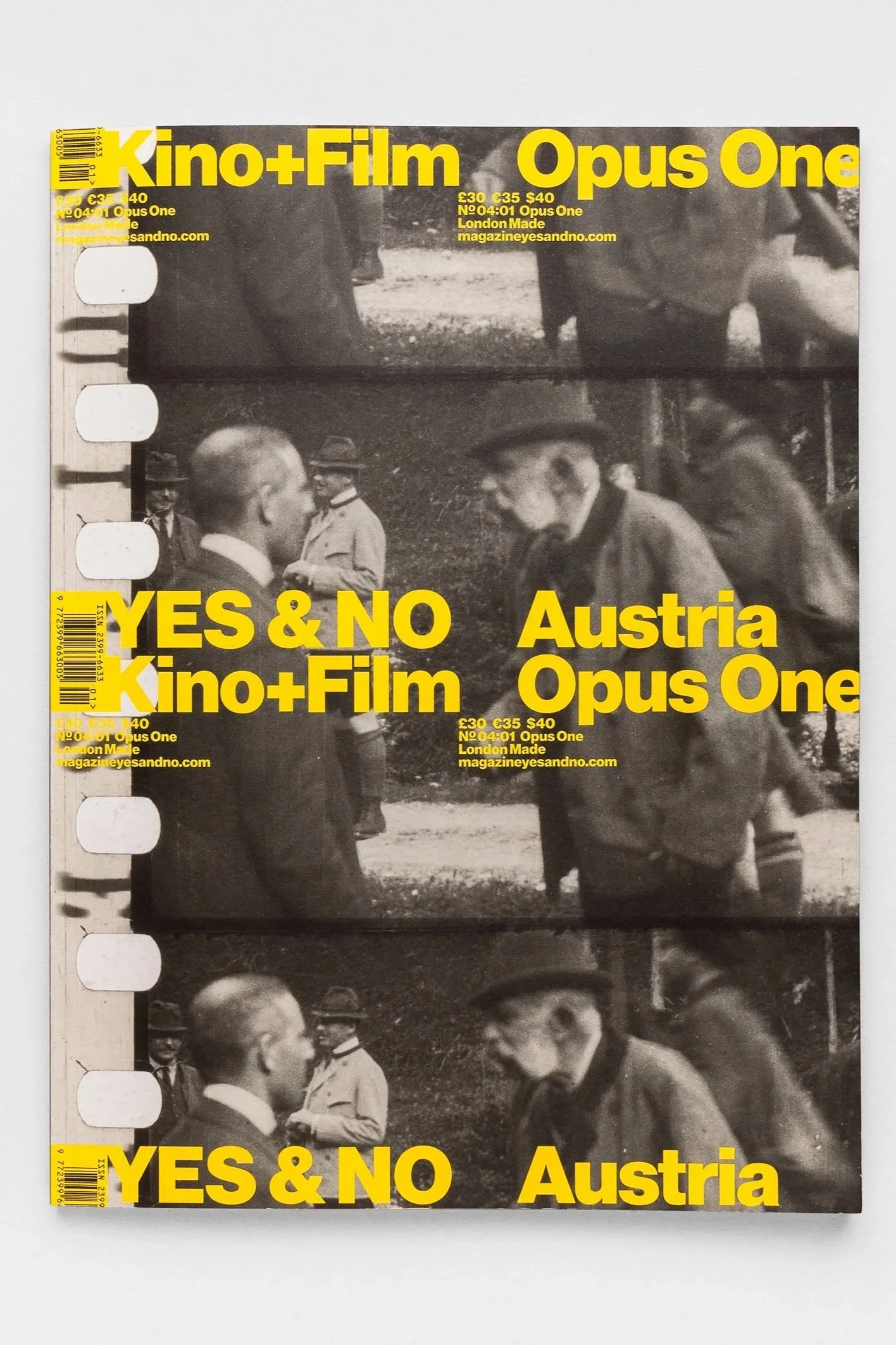
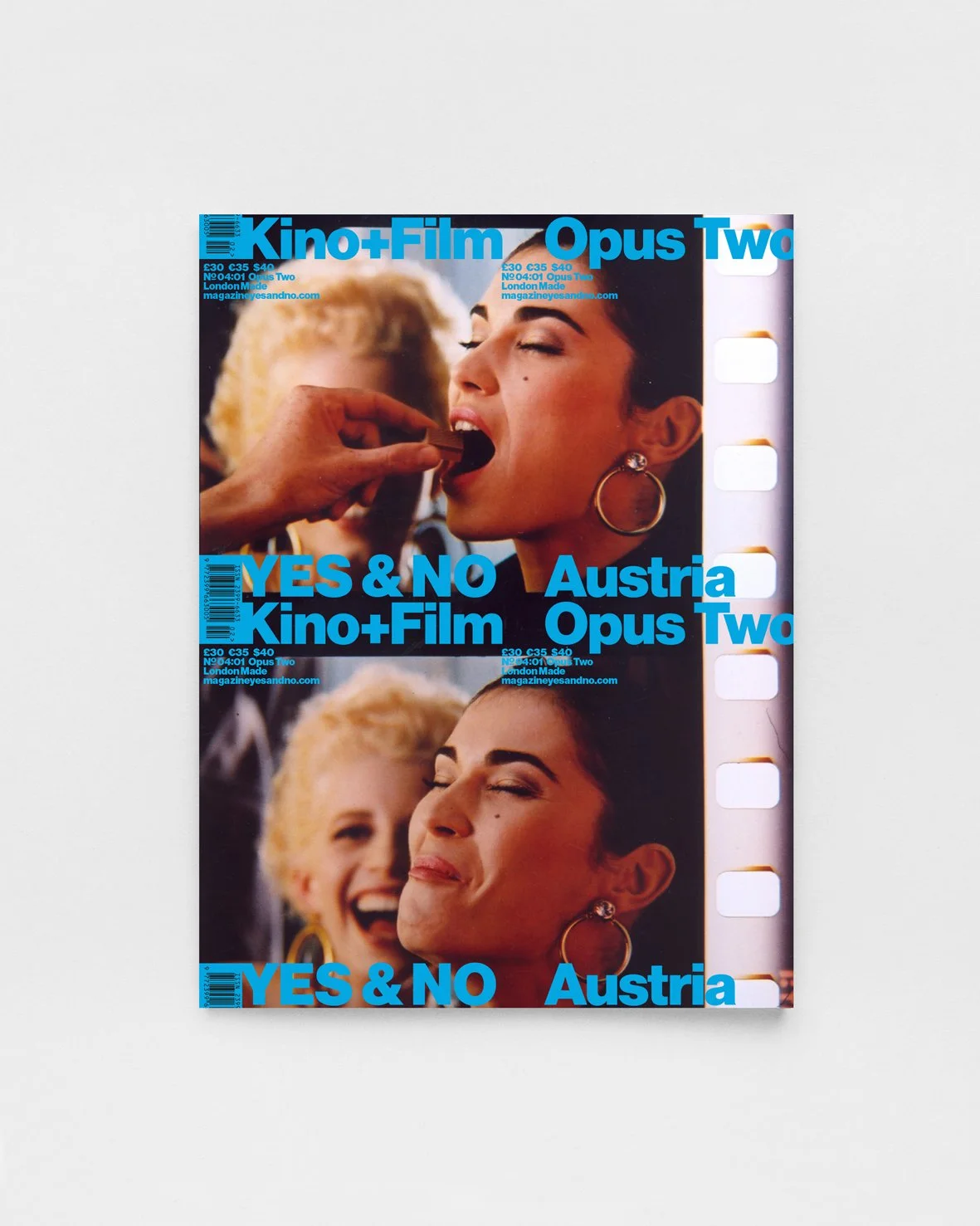

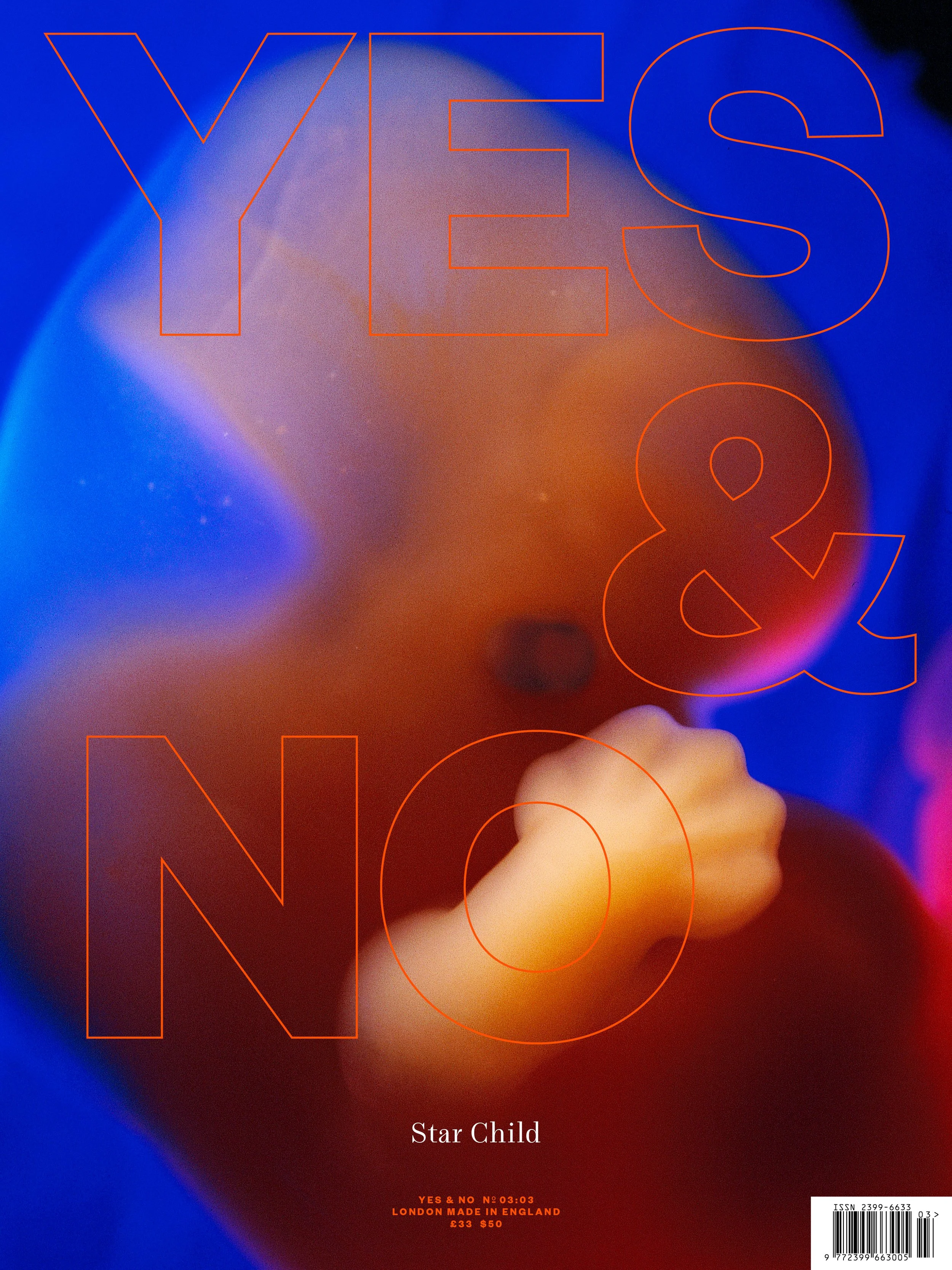
YES & NO 03:03 Star Child. First published in LIFE magazine in 1965, experience the ground-breaking photographs of the miracle of life before birth by Lennart Nilsson. The images featured inside this edition were the inspiration for Stanley Kubrick’s “Spaceman” embryo at the end of his 1968 film 2001: A Space Odyssey. Front Cover design: Studio Kunze. Cover photo: © Lennart Nilsson, TT/Science Photo Library